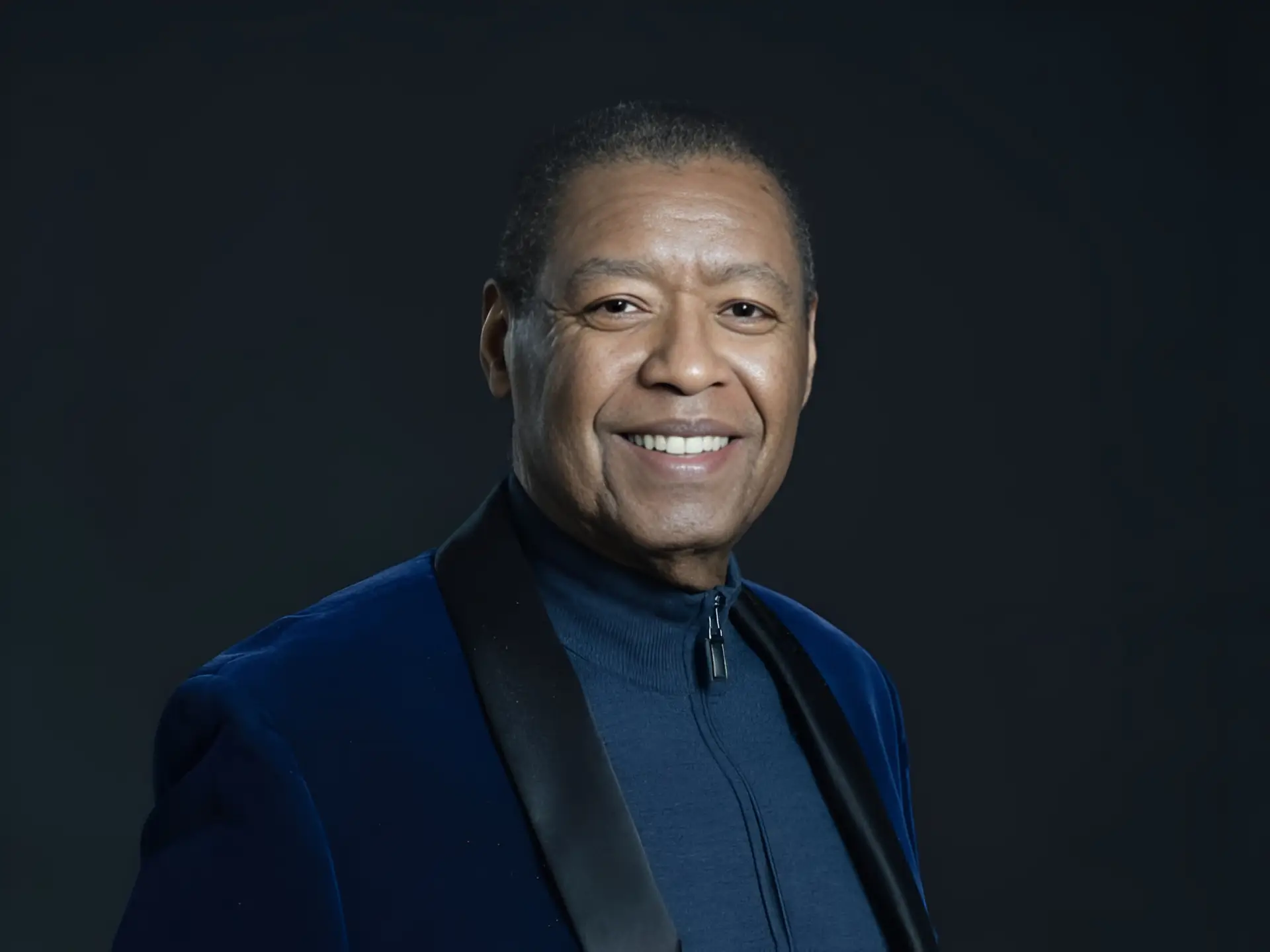

Have you ever wondered what worship truly is? Is it the moment when heaven meets earth, or is it just a prelude to the sermon? Ron Kenoly lived and exemplified true worship for more than 40 years. Many Christians have taken a moment since his untimely death to review not just his music but also the underlying belief that inspired it. From the life he lived, we can testify that he did not see himself primarily as a singer; he was a teacher who devoted his entire ministry to showing ordinary Christians how to meet with God.
He maintained that worship had to involve participation, even when it might easily turn into a performance. His songs had a significant impact on how the contemporary Church views worship. His legacy is not only in the recordings from the Integrity Music movement of the 1980s and 1990s but also in churches worldwide, where congregations now sing as active worshippers rather than passive listeners.
The theological principles that influenced his work are woven throughout this essay’s narrative. We’ll see how his life exemplifies worship as trust, Spirit-led spontaneity, Scripture in song, evangelism via praise, and a taste of paradise. We’ll also discover what all of this means for us today—not just worship leaders, but regular Christians who want to encounter God in truth and Spirit.
Ron Kenoly Before the Ministry
Ron Kenoly was a guy pursuing a different sort of limelight before he became a worldwide worship leader or a doctor of ministry. His family spoke music, and he was born in Coffeyville, Kansas, in 1944. After graduating from high school, he relocated to California and, like many gifted young men, pursued a career in entertainment. From 1965 until 1968, he sang Top 40 songs in a band named “The Mellow Fellows” while serving in the United States Air Force.
Following his service, he recorded secular R&B under the moniker “Ron Keith“, experiencing commercial success that many can only imagine. However, there was a price. Ron smoked heavily for over 10 years, which resulted in serious lung damage and a COPD diagnosis. Doctors informed him that he would never be able to sing again.
The pivotal moment came in November 1975. Ron made a straightforward vow to God and rededicated his life to Christ: “If You heal me and let me sing again, I will dedicate my life to You.” God fulfilled this promise by healing Ron. He received a Bible from his mother, who had been praying for his salvation. “I was in obscurity for eight years, singing my songs,” he stated in a 2024 interview. Over the next eight years, from 1975 to 1983, he opened Scripture and converted passages into songs. “Wherever the door would open, I would go. I did not earn any money. However, I was determined to put that talent to use.
Scripture’s preparation seasons are similar to those hidden years. Before leading Israel, Moses lived in the desert for decades; David cared for sheep before becoming a national leader. Ron’s wilderness was not a punishment but rather a time of development, since God often prepares individuals in solitude before putting their faith in them publicly.
Ron Kenoly in Ministry
Ron was appointed music pastor at Jubilee Christian Center in San Jose in 1985. Praise and worship as a genre hardly existed at the time, as it does now. The more charismatic music was often seen as excessively sentimental or even unbiblical, since most evangelical churches were rigidly conservative.
By highlighting the effectiveness of a biblical paradigm, He contributed massively to that narrative. He directed them to the Psalms, where King David gave instructions for bodily expressions, and Exodus 15, where Moses composed a hymn of adoration after crossing the Red Sea. Raise your hands, give a scream to the Lord, and clap. Ron believed that they were the proper conduct of subjects before a live monarch, not optional behaviors for expressive individuals.
The church expanded under his direction from around fifty members to hundreds, thousands, and finally seventeen thousand, yet he never used the numbers to define his mission. To prevent the platform from becoming a pedestal, he invested in teaching people how to lead during that season. He realized that there is simply a congregation of priests with no “audience” when God is there. This illustrated a fundamental tenet of the Reformation: each believer has the obligation and right to speak with God personally.
His life served as a warning that talent is insufficient. Ron had a doctorate in sacred music, a master’s degree in divinity, and a degree in music from Alameda College. He often said that his greatest concern was not whether he could sing well, but whether he was fulfilling God’s will in that moment and becoming the person the Father intended him to be. The guy known as “The Professor of Praise” never let his status as a musician or his academic background be his cornerstone. Obedience was his cornerstone.
What He Taught Us About Worship
Ron Kenoly frequently stated, “Music is the vehicle, but worship is the intimacy.” He cited Genesis 22:5, the first instance of the word “worship” in the Bible, where Abraham tells his servants, “Stay here with the donkey; the boy and I will go over there and worship.” He pointed out that this passage lacks instruments, a choir, a microphone, a father, a son, a mountain, and a heart of complete obedience. For Ron, this meant that, although music is a beautiful gift that can occur in silence, as demonstrated by the thief on the cross, who was unable to sing but turned to the King in faith.
Worship as the Spirit Leads
Ron’s sensitivity to the Holy Spirit was one of the most remarkable aspects of his ministry. He would have a set list planned, songs practiced, and everything ready before he took the stage. He would then give up the plan entirely if he felt God was moving in a different direction. “What did I prepare?” was never a question for him. “What is God doing right now?” was the constant question.
He believed that every worship session was attended by the same Spirit that resurrected Jesus from the dead and that a competent leader closely monitors God’s direction rather than merely following the timetable. This strong belief stemmed from Jesus’ own statement in John 4:23–24 that “true worshippers are those who worship in Spirit and in truth.” Both were essential. Knowledge without genuine participation might become a cold routine, and emotional intensity without a biblical foundation could become anarchy. Ron kept them both tense.
He also emphasized the need to strike a balance between worship and the Word. “If you get all worship and no Word, you have fanaticism,” he used to say. “You have legalism if you have just the Bible and no worship.” You must have that equilibrium. The Holy Spirit guides us further into Scripture rather than away from it.
Nowadays, click tunes, synchronized lighting, and flawlessly executed transitions are all highly produced. Ron’s ministry pushes us to make sure that our tools never become our masters, even if they are not inherently flawed. We must constantly allow the Holy Spirit to change our plans.
Worship as a Witness to the World
Ron also thought that worship is evangelistic in and of itself. Evangelism is often thought of as a sermon or a gospel pamphlet. Ron saw it in the palpable sensation of God’s presence that permeates a space during sincere worship.
He sang not only in churches but also in jails. Ron realized that when people experience the true presence of God, they don’t need a three-point case to believe He is real; they just feel it, so he would go and lead worship in those cells, community meetings, and unusual settings. In Acts 16, Paul and Silas experienced this. As they sang songs of gratitude while shackled in jail at midnight, the doors opened, and their shackles dropped. By daybreak, an encounter had led the jailer and his whole family to Christianity.
Behavior in Worship
Perhaps Ron’s most confrontational teaching was about our physical response to God. He often spoke about “appropriate behavior” in the presence of royalty. He noted that if we were ever to meet a literal queen, we would stand, bow, and follow the palace protocol without being told twice.
“But we don’t take into consideration that Jesus is King,” he once said. He argued that the commands in the Psalms to clap our hands, shout, and lift our hands in the sanctuary are mandates for how subjects should treat a king. When Psalm 24 says, “Lift your heads, O you gates,” it is a command to prepare for the King of Glory’s entry.
If we truly understood who we are worshipping, he believed, our bodies would respond naturally. The problem is not expressiveness or tradition but a failure to grasp the reality of whom we are approaching when we gather in His name.
Earthly Worship as a Rehearsal
Ron’s insistence on joyful, celebratory worship was not merely a personality or cultural preference but rooted in a conviction about eternity. He looked at the Book of Revelation and took it seriously. In Revelation 7:9-10, John sees a great multitude from every nation, tribe, people, and language, standing before the throne, crying out with a loud voice, “Salvation belongs to our God who sits on the throne and to the Lamb.” It is an eruption of joy.
Ron believed that every gathering of worship on earth is a rehearsal for that moment.
Gbemisola Akingbade
We are not inventing something when we lift our voices together in praise; we are practicing what we will do forever. We do not yet live in the fullness of God’s Kingdom, but in worship, we taste it. We get a preview of the world that is coming.
According to Hebrews 12:22–24, when we assemble for worship, we are joining the “joyful assembly” of angels and the spirits of the righteous, which is something far greater than ourselves. In a way, we are really present at the same celebration taking place in heaven at the moment. He conducted worship with expectancy rather than routine because of this.
Why would we approach everlasting worship today like we’re at a funeral if it’s boisterous, happy, and international? Ron’s response was straightforward: the triumph of the King we serve should be reflected in our delight during worship. We are not lamenting a vanquished Savior. We are commemorating the return of a rising, ruling Lord.
A Legacy that Outlasts Him
Ron Kenoly contributed to the development of the worship movement that is now the norm worldwide. Today, we take it for granted that we can enter a church and listen to a band sing for 30 minutes, using modern language that appeals to common people. However, that reality did not come about by happenstance. It was pioneered by individuals like Ron, who persisted despite being misinterpreted, disregarded, and questioned.
His legacy is a method of approaching God with truth, the Spirit, Scripture, and your whole being rather than a particular musical style. The guy who formerly recorded secular R&B under a stage name took his own life after winning a Dove Award, being dubbed “Psalmist of the Century” by a church president in Bogotá, Colombia, and being acknowledged by many churches as someone who helped redefine what it means to worship together.
His legacy is a method of approaching God with truth, the Spirit, Scripture, and your whole being rather than a particular musical style.
Gbemisola Akingbade
So how do we carry his legacy forward?
We have to get back to the Word first. Those eight years of transforming Scripture into music were Ron’s source of strength. Our poor interaction with the Word is often the source of the shallowness of our contemporary praise songs. As we train and counsel one another via psalms, hymns, and spiritual songs, Colossians 3:16 commands us to allow the Word of Christ to live fully within us. The depth of our roots in Scripture will always be reflected in the profundity of our worship.
Second, involvement must take precedence over performance. Your objective as a worship leader is to be transparent so that Jesus may be seen, not to be noticed. You are a priest, not an audience member, if you are a member of the congregation. The individual on stage has the same access to the throne as any believer in the room.
Your objective as a worship leader is to be transparent so that Jesus may be seen, not to be noticed.
Third, we ought to see worship as a way of life rather than only a Sunday ritual. Ron’s religion was not compartmentalized. Before expressing it in public, he developed his sensitivity to God’s guidance in private. Scripture and music should permeate your houses. Remember that worship is both celebration and surrender as you approach God with pleasure and respect.
Lastly, we need to increase our possessions. The worship leaders, pastors, and believers he educated who went on to instruct others were Ron’s greatest enduring influence, not his recordings. He realized that the purpose of ministry is to develop others’ potential rather than to gather people around oneself. What comes after you is the greatest legacy, not what you achieve.